
Nearly 120 years after its sanctuary opened, First Baptist Church of Walnut Hills, a cornerstone of Cincinnati’s African American community, secured a $240,000 grant to repair its historic building and continue serving the neighborhood for generations.
The congregation received the funding through the Preserving Black Churches program of the African American Cultural Heritage Action Fund, a division of the National Trust for Historic Preservation. Backed by Lilly Endowment Inc., the award is part of $8.5 million distributed this year to 33 historically Black churches across the United States.
The Action Fund recognized First Baptist in the Activism category.
“Since 1908, First Baptist Church of Walnut Hills has served as a prominent pillar of Cincinnati’s Black community,” the Action Fund said of the church in announcing the grant. “It was central to civil and women’s civil rights activism, and as a religious and classical music performance venue.”
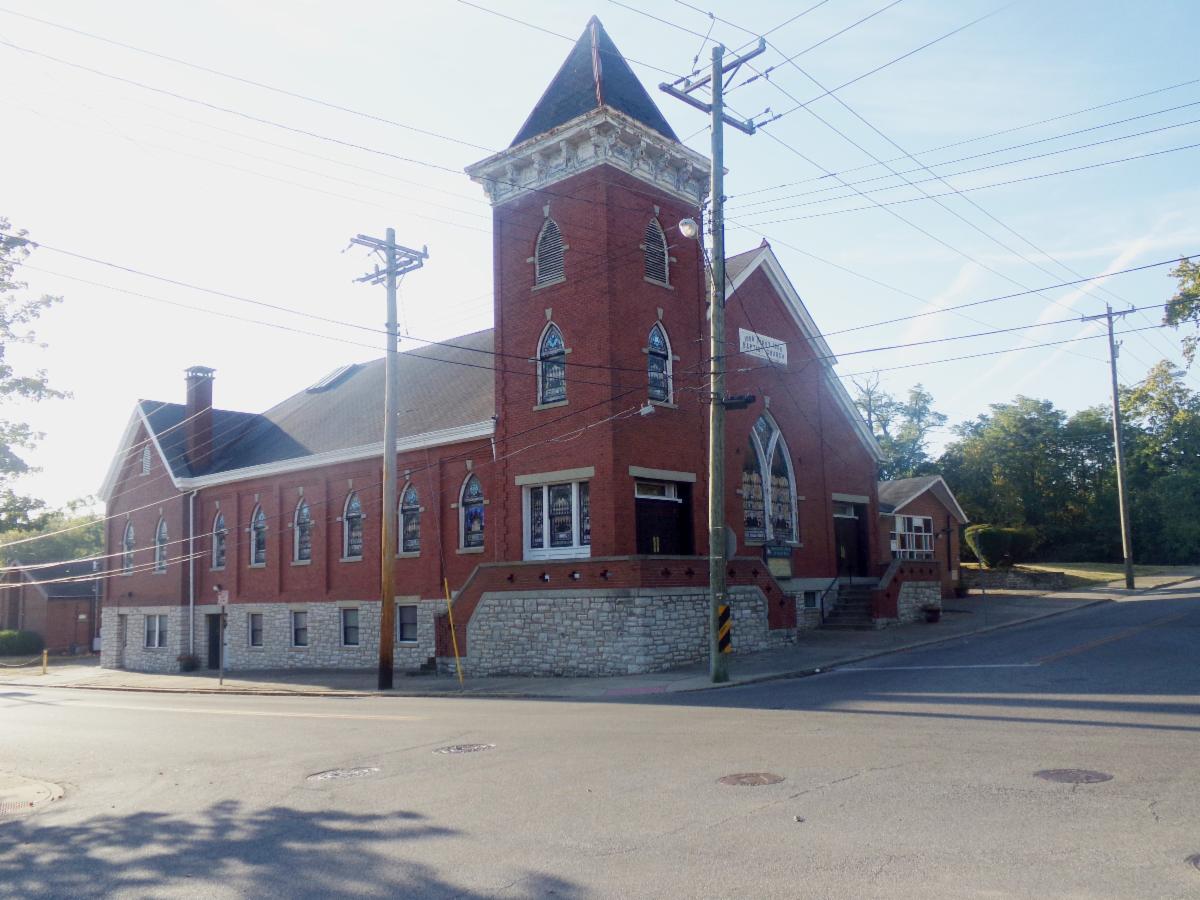
First Baptist – still in use today – is the only church in Greater Cincinnati or Northern Kentucky to receive a Preserving Black Churches grant to date.
“We are thrilled to receive this support, which allows us to revitalize the church and efforts to impact our community,” said Aaron Scott, minister at First Baptist Church of Walnut Hills.
A congregation rooted in neighborhood history
The church’s story begins before the Civil War. In 1856, Black Baptists in Walnut Hills joined with African Methodist Episcopals to worship in the home of Dangerfield Early. By 1863, the growing groups formed separate congregations, leading to the formal establishment of First Baptist Church of Walnut Hills.
Construction on the building for its current 500-seat sanctuary wrapped up in 1908. Its completion created a community anchor on a prominent corner in the heart of Walnut Hills, one of Cincinnati’s most historically significant and culturally diverse neighborhoods.
Rev. James Kemper settled Walnut Hills in the early 19th century and established a farm that overlooked the Ohio River above the growing city. Annexed by Cincinnati in 1869, the neighborhood became known for its scenic views and access to downtown and industrial centers.
By the mid-1800s, Walnut Hills was home to both Black and white middle-class residents, businesses and institutions. Other historic landmarks such as Lane Seminary, where leaders debated abolitionism, Frederick Douglass School, Peebles Corner and Eden Park showcase the neighborhood’s layered history.
Documenting and sharing that past is the work of the Walnut Hills Historical Society, a committee of the Walnut Hills Area Council, a volunteer-led council that acts as a liaison between neighborhood residents and Cincinnati city government.
The society researches the neighborhood’s history, partners with schools, churches and foundations to provide historical context for community projects and conducts ongoing research into the people and institutions that shaped Walnut Hills. Its goal is to present a deeper understanding of the neighborhood’s past to inform development and strengthen the community today.
First Baptist has played a central role in both faith and everyday life in Walnut Hills. NAACP meetings, National Colored Teachers conventions, lectures and mass choir concerts have taken place beneath its vaulted ceiling. A 1926 pipe organ has supported both sacred and classical music.
Beyond worship, the church has provided scholarships, food and clothing programs, and services for seniors, supporting families in their daily lives, according to JoAnn Morse, a longtime volunteer with the Walnut Hills Historical Society.
That work continues today, with the church playing an active role in Walnut Hills’ ongoing renaissance, including the growth of a vibrant arts and culture district along Gilbert Avenue.
“First Baptist Church of Walnut Hills has been part of our neighborhood for over 150 years,” Morse said. “During that time, this congregation has welcomed families from the Great Migration, sung spirituals and Bach, supported youth, and advocated for justice.
“It is a privilege to have our local church nationally honored with this grant.”
Local partners step in
The Walnut Hills Historical Society led the effort to secure the Action Fund grant, with support from Cincinnati Preservation, the region’s preservation advocacy organization. Beth Johnson, Cincinnati Preservation’s executive director, said the award highlights both the church’s importance and a broader commitment to telling a fuller local history.
To date, the Action Fund has supported more than 170 historically Black churches nationwide, including four in Ohio. The others are in Cleveland, Akron and Athens.
“The African American Cultural Heritage Action Fund Grant awarded to First Baptist Church of Walnut Hills directly aligns with Cincinnati Preservation’s mission to preserve, protect and celebrate the historic buildings, landscapes and stories that define our region,” Johnson said. She added that the grant also supports the organization’s Black Sites and Underrepresented Communities Initiative, which works to identify and preserve places “connected to communities that have not traditionally been centered in preservation narratives.”

In January 2024, the City of Cincinnati designated the church a local Historic Landmark, formally recognizing its architectural and cultural significance. Cincinnati Preservation co-authored and strongly supported that designation, highlighting both the building’s architectural value and its central role in Walnut Hills and Cincinnati’s African American history.
During the 2023 push for the designation, Johnson – who previously led preservation work in Covington, Kentucky; Austin, Texas; and Cincinnati – said the church remained well cared for but needed upgrades and maintenance. She and other advocates emphasized that earning historic recognition could help the congregation access funding for repairs.
With the Action Fund grant, First Baptist will tackle urgent repairs in its sanctuary, including water damage, masonry and roof restoration, as well as necessary interior improvements that will allow the congregation to reopen damaged areas.
Cincinnati Preservation will provide technical expertise throughout the rehabilitation, Johnson said, adding that the organization plans to use its Preservation Loan Fund to offer an unspecified bridge loan to manage cash flow between completed work and reimbursement.
Project timelines aren’t yet available.
“We are excited to support First Baptist Church and the Walnut Hills Historical Society by elevating their story and the great work they are doing,” Johnson said.
Discover more from Movers & Makers
Subscribe to get the latest posts sent to your email.