
Content provided and sponsored by Camargo Insurance

As leaders and board members of nonprofit organizations, your focus is often directed toward advancing your mission, developing impactful programs, and serving your community. However, it’s equally important to ask: Is your nonprofit adequately protected from the risks that could jeopardize your hard work?
It’s easy to overlook the potential liabilities when they aren’t glaringly obvious, but as the saying goes, it’s often what you don’t see that can hurt you the most. Below, we’ll explore some key considerations for safeguarding your organization—ensuring that your passion and hard work are protected for the long term.
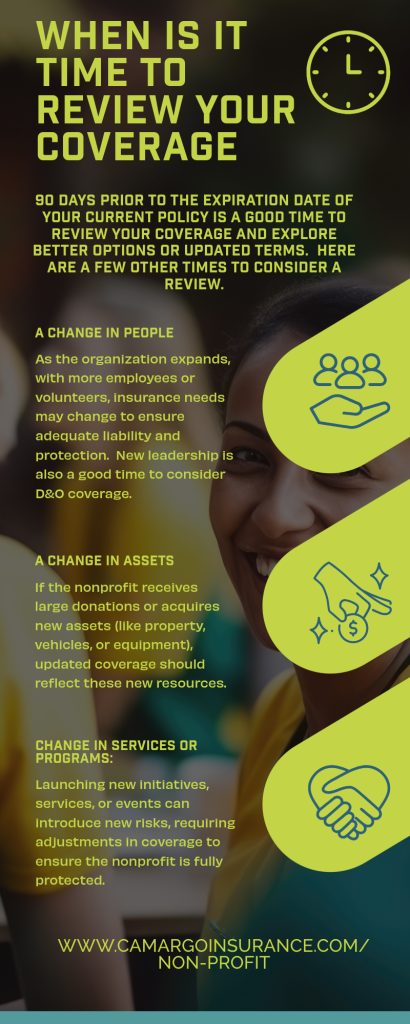
1. Have You Outgrown Your Insurance?
Your organization may have started small, but as it grows—adding more staff, volunteers, or programs—new risks emerge. For instance, if your liability policy hasn’t been reviewed in light of a new fundraising event or a larger community reach, you may have gaps in your coverage. Expanding your operations without reassessing your insurance can leave you exposed to vulnerabilities that you didn’t anticipate.
2. Are Your Volunteers Properly Covered?
Volunteers often form the backbone of nonprofit organizations, but are they properly protected? Many assume that volunteers are automatically covered under general liability insurance, but that isn’t always the case. Without the appropriate coverage, your organization could be at risk if a volunteer is injured or unintentionally causes harm while representing your nonprofit.
3. Do You Understand the Risks of Large Donations?
Receiving a large donation or bequest can be an exciting boost for your nonprofit. However, significant asset increases, such as a donated property or a major financial contribution, may necessitate adjustments to your insurance coverage. If these new assets are not reflected in your policy, you could find yourself facing unexpected costs and risks down the road.
4. Are You Protected Against Cyber Threats?
Cybersecurity has become a critical issue for all organizations, and nonprofits are not immune. With valuable donor data, financial information, and other sensitive communications at risk, a data breach could be devastating. Many nonprofits assume they are too small to be targeted, but cybercriminals often view smaller organizations as easy prey. It’s vital to ensure your insurance covers potential cyber threats to safeguard your nonprofit.
5. Are You Prepared for the Unexpected?
Natural disasters, lawsuits, and accidents—unexpected events can quickly derail even the most stable nonprofit organizations. It’s essential to have an emergency plan and the right insurance coverage to handle these surprises. Whether it’s property damage, liability claims, or unforeseen legal battles, preparing for the unexpected helps your organization navigate potential disruptions.
6. Are You Compliant with Legal and Regulatory Changes?
The nonprofit sector operates in a constantly shifting legal and regulatory environment. Failing to keep up with changes in tax laws, employment regulations, or compliance requirements can expose your organization to fines and penalties. Regularly reviewing your coverage ensures that your nonprofit remains compliant with any new rules affecting your sector.
Essential Insurance Coverages for Nonprofits
Now that we’ve discussed some potential risks, let’s explore five critical insurance coverages that go beyond the obvious, like auto and property insurance. These coverages are essential for ensuring that your nonprofit is fully protected against the unique challenges it faces.
- General Liability Insurance
This coverage protects your organization from claims related to third-party bodily injury, property damage, or personal injury. For example, if someone slips and falls at your event or a volunteer accidentally damages property, general liability insurance can cover legal fees, medical expenses, and settlements. - Directors and Officers (D&O) Liability Insurance
D&O insurance is critical for protecting board members, directors, and officers from personal liability for decisions made on behalf of the organization. Without it, individuals may be sued personally for mismanagement, wrongful acts, or breach of fiduciary duty, putting their personal assets at risk. - Employment Practices Liability Insurance (EPLI)
Nonprofits, like any employer, can face lawsuits related to employment practices, such as wrongful termination, discrimination, or harassment claims. EPLI covers these employment-related issues, providing protection against costly legal battles that could otherwise strain your organization’s resources. - Professional Liability (Errors & Omissions) Insurance
If your nonprofit provides advice, counseling, or professional services—such as educational programs, social services, or consulting—professional liability insurance is essential. This coverage protects against claims of negligence, errors, or omissions in the services your organization provides. - Cyber Liability Insurance
As data breaches and cyberattacks become increasingly common, cyber liability insurance has become a must for nonprofits. This coverage helps protect your organization from the fallout of a data breach, including legal costs, notification expenses, credit monitoring for affected individuals, and even ransomware demands.
Don’t Let Insurance Be an Afterthought
Nonprofits often overlook the importance of regularly reviewing their insurance coverage, assuming they are protected simply because they’ve always “had insurance.” However, as your organization evolves and new risks arise, it’s crucial to reassess your policies to ensure your nonprofit is fully protected.
Regular insurance reviews help you stay covered—whether you’re scaling operations, adjusting to new risks, or staying compliant with legal changes. This proactive approach allows you to focus on what truly matters: serving your community and advancing your mission without worrying about unforeseen threats.
Ultimately, it’s not just about protecting the organization; it’s about protecting the people who rely on the work you do. As a leader or board member, it’s your responsibility to ensure that your nonprofit is fully prepared for whatever challenges the future may bring.
This content provided and sponsored by …
Discover more from Movers & Makers
Subscribe to get the latest posts sent to your email.